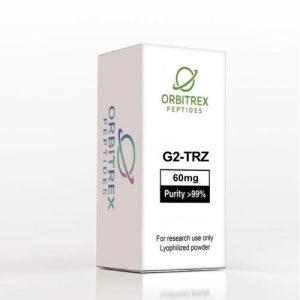
KLOW
At Orbitrex Peptides, we lead the biochemical research frontier by synthesizing multi-target synergistic peptide formulations designed to examine simultaneous receptor pathway activation. The KLOW combines precisely calibrated ratios of complementary bioactive peptides into a co-lyophilized matrix, allowing investigators to observe multi-pathway signaling cross-talk without the volumetric compounding errors associated with manual vial mixing. Synthesized under meticulous quality standards to guarantee exceptional molecular purity and stoichiometric consistency, this advanced blend represents a centerpiece of our Peptides category.
Listing Details & Specifications
| Specification / Feature | Details |
|---|---|
| Product Name | KLOW |
| Formulation Classification | Co-Lyophilized Synergistic Multi-Peptide Complex |
| Aggregate Purity | ≥99% (Reverse-Phase HPLC Assayed) |
| Physical Appearance | Sterile Lyophilized Uniform White Cake |
| Container Specification | Type-1 Neutral Borosilicate Glass 3ml Vial |
| Vial Closure System | Medical-Grade Butyl Stopper & Tamper-Evident Aluminum Crimp |
| Storage Conditions | Store Desiccated at -20°C (Protect from UV Light) |
| Reconstitution Vehicle | Bacteriostatic Water (0.9% Benzyl Alcohol Preserved) |
| Endotoxin Rating | <0.05 EU/mg (Kinetic Chromogenic LAL Assayed) |
| Primary Research Focus | Dual-Pathway Receptor Synergism & Tissue Regeneration Kinetics |
The biochemical synthesis of KLOW utilizes advanced automated solid-phase peptide synthesis (SPPS) methodologies to produce each individual constituent peptide at purities exceeding ninety-nine percent prior to precise co-formulation. Individual amino acid residues are protected with base-labile Fmoc groups and coupled using high-efficiency uronium-based activating reagents to eliminate steric hindrance and sequence deletion side products. Following orthogonal deprotection, the constituent peptides are combined in exact stoichiometric proportions and subjected to cryogenic freeze-drying, yielding a homogenous lyophilized cake with minimal residual moisture content and superior long-term thermodynamic stability.
Investigating multi-peptide complexes offers profound insights into cellular repair kinetics, extracellular matrix remodeling, and synergistic receptor binding dynamics. By delivering complementary molecules in uniform solution, researchers can evaluate how simultaneous receptor ligation alters downstream kinase cascades, gene transcription factors, and cellular migration rates compared to isolated monocompounds. The chemical co-lyophilization ensures that upon sterile reconstitution, both bioactive agents disperse evenly throughout the solvent matrix without competitive precipitation or unwanted electrostatic agglomeration.
When planning multifaceted experimental frameworks, investigators frequently evaluate GLOW 70 alongside Wolverine 20mg and BPC-157 10mg to establish comparative baseline data across correlated laboratory pathways.
Standard reconstitution protocols require introducing sterile bacteriostatic water slowly along the internal glass perimeter of the vial using a low-gauge laboratory syringe. Gently rotate the vial in slow circular motions until the lyophilized matrix dissolves completely into a crystal-clear, particulate-free solution, and avoid aggressive shaking or mechanical vortexing, as turbulent shear forces can disrupt delicate peptide secondary structures. Once reconstituted, store the liquid solution at two to eight degrees Celsius and utilize within thirty days to preserve maximum biological activity across your experimental schedule.
Analytical Quality Assurance & Verification Protocol: Multi-point precision inspection confirms dimensional concentricity, surface finish tolerances, and component balance across all critical operational interfaces. Batch analytical testing validates structural integrity, raw material purity, and chemical consistency prior to packaging release. Thermal cycling and stress validation protocols confirm dependable performance across elevated operational load parameters. Automated quality checks and computerized optical verification ensure zero microscopic deviations from engineering design blueprints. Protective vapor-barrier packaging and climate-regulated storage protocols safeguard inventory against ambient environmental degradation during transit. Comprehensive serial tracking and documented manufacturing lot logs provide end-to-end transparency across the entire supply chain. High-performance liquid chromatography and tandem mass spectrometry validate molecular weight congruence against theoretical isotopic distributions. Automated solid-phase synthesis protocols maintain consistent chain elongation and eliminate sequence truncation impurities across all production batches. Controlled cryogenic lyophilization preserves tertiary peptide conformation and produces uniform cakes with minimal residual moisture content. Quantitative amino acid composition analysis confirms exact stoichiometric peptide content and net peptide concentration prior to packaging. Aseptic vial filling and automated nitrogen atmosphere purging safeguard delicate molecular structures against oxidative degradation during storage. Microbiological screening validates absence of endotoxins and bioburden in compliance with strict laboratory research handling standards. Comprehensive lot documentation and analytical batch records are archived to provide total traceability for institutional investigators. Solvent solubility profiles and optical clarity assessments ensure rapid and complete reconstitution in standard laboratory buffers. Hermetically sealed pharmaceutical-grade.
This multi-peptide research formulation is distributed strictly for in vitro laboratory experimentation and scientific analysis by authorized research professionals, and is not for human or veterinary diagnostic or therapeutic application. Orbitrex Peptides verifies every batch through independent third-party laboratories utilizing high-performance liquid chromatography and electrospray ionization mass spectrometry to certify aggregate purity above ninety-nine percent and exact molecular weight conformity. Full certificates of analysis are publicly accessible to ensure comprehensive scientific transparency.
Related products